
Learn effective Japanese knotweed identification with our practical guide for UK homeowners and surveyors to protect your property.


Learn effective Japanese knotweed identification with our practical guide for UK homeowners and surveyors to protect your property.

Learn how to choose the right UK specialist for Japanese knotweed identification and invasive plant removal to protect your property effectively.
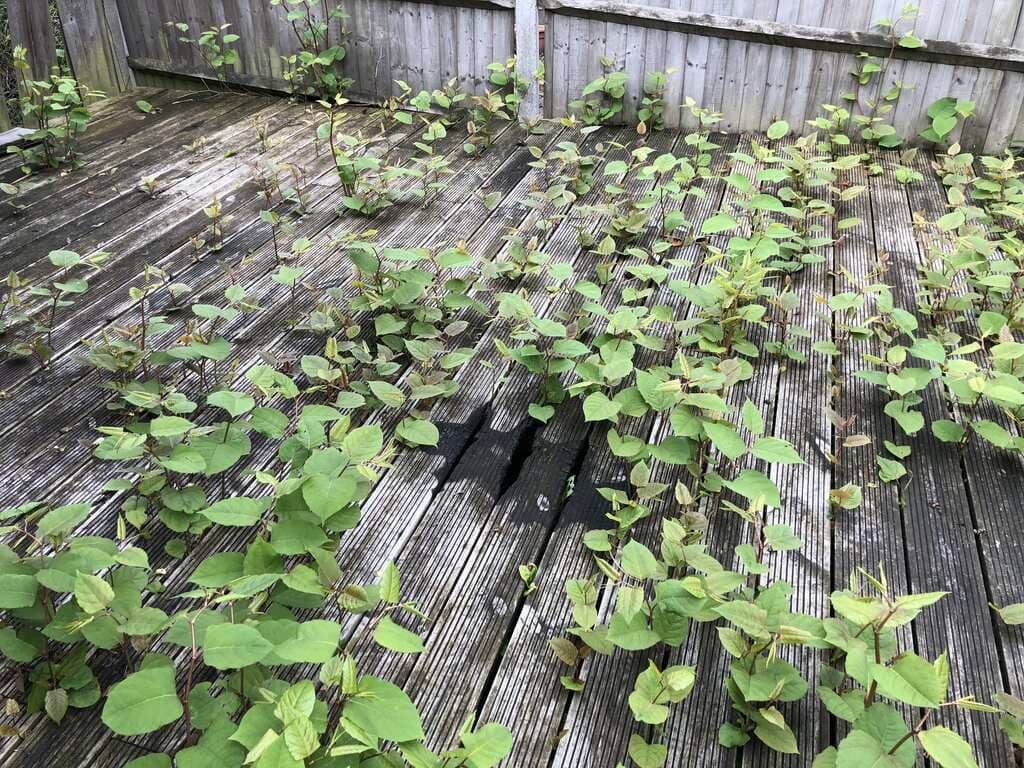
Japanese knotweed is one of the most persistent and invasive plants found in the UK. With its rapid summer growth and deep, resilient rhizome system, homeowners often hope that winter temperatures will naturally kill it off. Unfortunately, that is not the case. Although Japanese knotweed appears to die back in the colder months, the plant itself survives underground and regrows vigorously in spring.
In this guide, we explain what really happens to Japanese knotweed in winter, why it survives, the signs to look out for and how winter affects treatment options. We also include semantic SEO and natural-language variations that target related questions people frequently ask online.
No. Japanese knotweed does not die in winter. While the visible stems, leaves and canes die back after the first frost, the underground rhizomes remain alive, healthy and ready to regrow. These rhizomes can survive harsh winter conditions, including sub-zero temperatures.
The plant simply enters a dormant phase, not a dead phase. This dormancy is a natural part of its life cycle and is one of the main reasons the species is so difficult to eradicate without specialist treatment.
During the colder months, knotweed undergoes several predictable changes:
Stems turn brittle, hollow and brown, and leaves fall away. To an untrained eye, the site may look clear, which creates a misleading impression that the plant has died.
Rhizomes hold huge energy reserves and remain alive below the surface. They can stay viable for years, even if left untouched.
Although surface growth halts, rhizomes may still extend laterally underground. This is why winter is not a guarantee of safety for nearby structures, foundations, patios or retaining walls.
Short answer: no.
Frost may damage the exposed stems, but the invasive root system is built to survive. Studies show the rhizomes can withstand temperatures of around –10°C and still regrow the following spring.
Yes. Once temperatures warm up, new red/purple shoots emerge from the ground, often stronger due to the energy stored over winter.
This is why many homeowners see sudden, aggressive growth between March and May, with canes commonly reaching 2–3 metres in a single season.
Winter can be a valuable treatment window, depending on the method used.
Herbicide applications are most effective in late summer or early autumn, when the plant is actively drawing nutrients into its rhizomes. In winter, absorption rates are low, so herbicide alone is unlikely to provide effective control.
Winter often provides improved access for mechanical excavation because:
Professional excavation is highly effective year-round, but winter can offer logistical advantages.
Winter surveys can help identify last year’s canes, growth boundaries and rhizome spread. Professionals can map and plan a treatment programme that starts early in the next growing season.
Even during winter, Japanese knotweed can continue to damage property. Although the plant appears dormant, its underground rhizome system remains active and capable of spreading. These rhizomes can extend further beneath the surface, exploit small cracks in paving and concrete, disrupt drainage systems, and place pressure on foundations, retaining walls and other structures. Because the plant never truly dies back, the structural risk does not pause over winter, making early management essential.
While above-ground growth stops during winter and the visible spread slows down significantly, the plant does not become completely inactive. Underground, the rhizomes can continue to grow and extend their reach. These rhizomes are capable of spreading horizontally by up to 7 metres from the visible stand, regardless of the season. This means that even though the plant looks dead or dormant on the surface, it may still be expanding its underground network during winter, creating the potential for new shoots to emerge in spring.
No. The longer the plant is left, the further it spreads. Even if the above-ground canes look dead, the rhizomes are still active.
Winter is an ideal time to:
Japanese knotweed is an engineered survivor, designed to withstand harsh UK winters and return stronger each spring. Its biological structure gives it year-round resilience, which is why cold weather alone is never enough to kill it.
The plant stores most of its energy in thick underground rhizomes buried well below the frost line. Even when surface temperatures drop below zero, these rhizomes remain insulated and fully alive.
During winter, knotweed enters a dormant state rather than dying. Growth pauses, leaves fall away and canes turn brown, but the plant is conserving energy ready for rapid regrowth when spring arrives.
As soon as temperatures rise, knotweed uses its stored energy to produce fast, aggressive new shoots. This allows it to regain height quickly and dominate surrounding vegetation.
Perhaps its most challenging trait is its ability to regenerate from rhizome fragments as small as a fingernail. Even disturbed or partially removed roots can create a new infestation.
Because of all this, winter die-back is only cosmetic. While the surface growth appears dead, the plant itself remains fully viable beneath the soil. Effective eradication requires targeted professional treatment, not reliance on seasonal die-back.
If you suspect Japanese knotweed on your property at any time of year, especially when it looks dormant, early action is key. A qualified contractor can confirm identification, map the infestation, and recommend a treatment plan tailored to your site and future property plans.
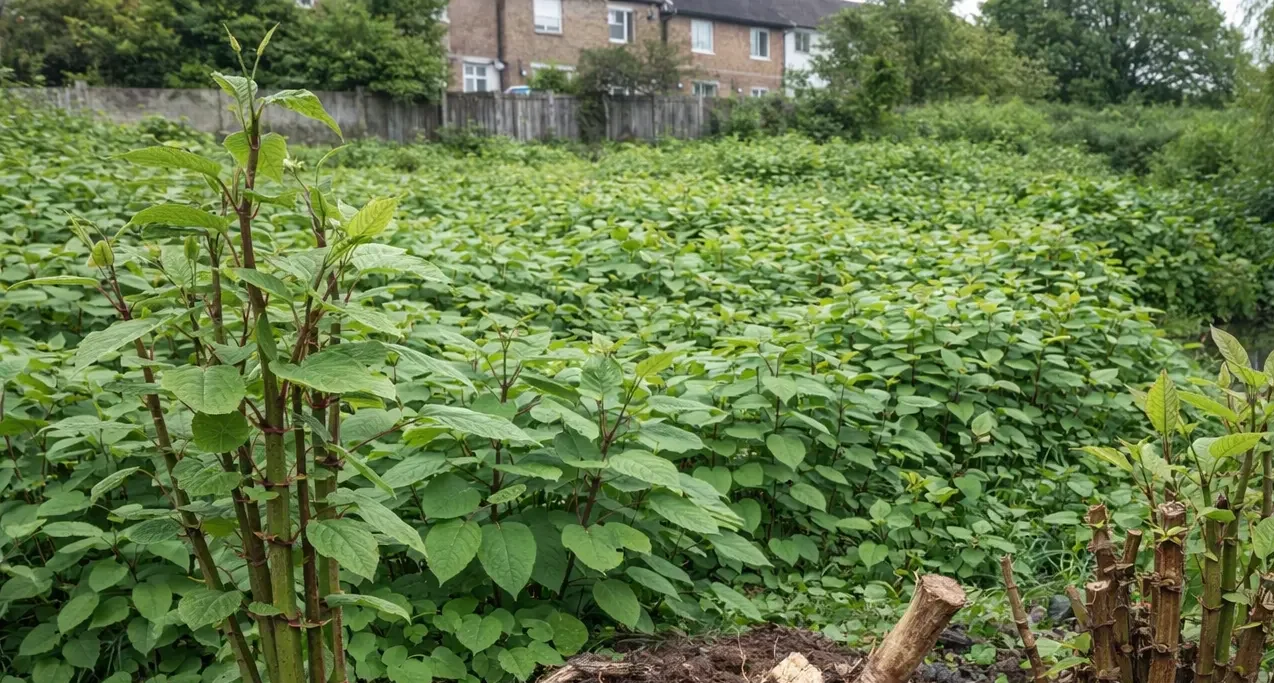
Japanese Knotweed (Fallopia japonica) is one of the most invasive plant species in the UK. Known for its aggressive growth, the plant can grow up to 20cm per day during peak summer months, allowing it to quickly dominate gardens, construction sites, and open land.
Originally introduced to the UK in the mid-19th century around 1850, Japanese Knotweed was initially valued as an ornamental plant. At the time, its rapid growth and hardy nature were seen as desirable features. However, it soon became clear that the plant could cause serious environmental and structural problems.
Today, Japanese Knotweed is notorious for:
Because of these risks, the presence of Japanese Knotweed can make it more difficult for buyers to secure a mortgage, as lenders often require a professional Japanese Knotweed management plan.
Unlike many plants, Japanese Knotweed rarely spreads through seeds in the UK. Instead, it spreads primarily through its underground rhizome system.
Rhizomes are underground stems that store nutrients and allow the plant to regenerate quickly. Even the smallest fragments can grow into a new plant.
 Japanese Knotweed typically spreads through:
This means that activities such as construction work, landscaping, or soil movement can accidentally spread the plant to new areas.
In fact, a rhizome fragment as small as 10mm can regenerate into a full plant, which explains why infestations can grow so rapidly.
Waterways can also contribute to the spread. If fragments enter rivers or streams, they can be transported downstream and establish new colonies along riverbanks.
Interestingly, Japanese Knotweed is far less invasive in its native environment in Japan.
In Japan, the plant spreads mainly through seed dispersal and is naturally controlled by competing plants, insects, and environmental conditions.
However, when introduced to the UK:
As a result, the plant adapted to reproduce primarily through root, stem, and crown fragments, allowing it to spread much more aggressively than in its native habitat.
Removing the plant from its natural ecosystem unintentionally created one of the UK’s most persistent invasive species problems.
Japanese Knotweed does not appear randomly. If it is present on your property, there is usually a source nearby.
Common sources include:
If you discover Japanese Knotweed on your property, it is worth checking surrounding areas to identify where the infestation may have originated.
Sometimes contaminated soil can be transported by:
Even a small amount of contaminated soil can introduce the plant to a new location.
Some animals may contribute to the spread of Japanese Knotweed, although this is far less common than human-related soil movement.
Animals such as:
may consume parts of the plant. In certain cases, small stem or cane fragments may survive digestion and be passed in animal droppings.
If these fragments end up in suitable soil conditions, they may establish new growth.
However, rhizome fragments are generally unlikely to survive this process. As a result, animal spreading is considered a minor contributor compared to soil movement and construction activities.
Japanese Knotweed is now widespread across the UK, and only a few areas remain unaffected.
Several major cities have reported particularly high concentrations, including:
Several monitoring schemes and databases track Japanese Knotweed sightings across the UK to help map infestations and support management strategies.
Because the plant is so widespread, property owners are encouraged to report and treat infestations early to prevent further spread.
Japanese Knotweed is known for its extremely rapid growth rate.
During the peak summer growing season, the plant can grow up to 20cm per day above ground.
Above ground, the plant produces: 
Below ground, the rhizome network spreads extensively. While the exact rate of underground growth is difficult to measure, research shows that rhizomes can extend several metres horizontally and deep into the soil.
This underground network is what makes Japanese Knotweed so difficult to eradicate without professional treatment.
Because Japanese Knotweed can regenerate from extremely small fragments, improper disposal can easily cause new infestations.
Dumping plant material in soil or green waste can unintentionally spread the plant to new locations.
In the UK, Japanese Knotweed is classified as controlled waste, meaning it must be disposed of at licensed landfill facilities or treated using approved on-site management methods.
Professional management ensures:
Japanese Knotweed spreads primarily through rhizome fragments, stems, and contaminated soil, making it one of the most persistent invasive plants in the UK.
Its ability to grow rapidly and regenerate from tiny fragments means infestations can quickly become extensive if left untreated. Early identification and professional management are essential to protect property, land value, and surrounding environments.
If you have spotted Japanese Knotweed on your property and need professional help, CYB Environmental offers expert removal and treatment services with a 5-year warranty.
Contact CYB Environmental today to arrange a site survey and Japanese Knotweed management plan.
Japanese Knotweed spreads mainly through underground rhizomes, which are root-like stems capable of producing new plants. Even tiny fragments of rhizome, stem, or crown can grow into a new infestation when moved through soil, water, construction work, or garden waste.
Yes, Japanese Knotweed can easily spread from neighbouring properties through its underground rhizome network. The roots can extend several metres beneath fences, walls, and boundaries, allowing the plant to invade nearby gardens and land if it is not properly treated.
Japanese Knotweed grows extremely quickly, especially during the summer months. Under ideal conditions, it can grow up to 20cm per day above ground. Its underground rhizomes can also spread several metres, making infestations difficult to control without professional treatment.
Yes, contaminated soil is one of the most common ways Japanese Knotweed spreads. Construction, landscaping, or dumping soil containing rhizome fragments can introduce the plant to new locations, where even a tiny fragment can grow into a full plant.
In the UK, Japanese Knotweed rarely spreads by seeds. Instead, it mainly spreads through vegetative growth from rhizomes, stems, and crowns. This makes it particularly invasive because small plant fragments can regenerate and create entirely new infestations.
Some animals such as sheep, cattle, and goats may spread Japanese Knotweed after consuming parts of the plant. In certain cases, small stem fragments may survive digestion and grow when deposited in soil, although this is far less common than spreading through contaminated soil.
Japanese Knotweed rhizomes can spread up to seven metres horizontally and two to three metres deep underground. This extensive root system allows the plant to invade nearby areas and makes professional management essential to prevent further spread.