
Does Japanese knotweed die off in winter?
Japanese knotweed is one of the most persistent and invasive plants found in the UK. With its rapid summer growth and deep, resilient rhizome system, homeowners often hope that winter temperatures will naturally kill it off. Unfortunately, that is not the case. Although Japanese knotweed appears to die back in the colder months, the plant itself survives underground and regrows vigorously in spring.
In this guide, we explain what really happens to Japanese knotweed in winter, why it survives, the signs to look out for and how winter affects treatment options. We also include semantic SEO and natural-language variations that target related questions people frequently ask online.
No. Japanese knotweed does not die in winter. While the visible stems, leaves and canes die back after the first frost, the underground rhizomes remain alive, healthy and ready to regrow. These rhizomes can survive harsh winter conditions, including sub-zero temperatures.
The plant simply enters a dormant phase, not a dead phase. This dormancy is a natural part of its life cycle and is one of the main reasons the species is so difficult to eradicate without specialist treatment.
What happens to Japanese knotweed in winter?
During the colder months, knotweed undergoes several predictable changes:
1. The above-ground growth dies back
Stems turn brittle, hollow and brown, and leaves fall away. To an untrained eye, the site may look clear, which creates a misleading impression that the plant has died.
2. The underground rhizome network remains active
Rhizomes hold huge energy reserves and remain alive below the surface. They can stay viable for years, even if left untouched.
3. Growth slows, but the plant continues to spread
Although surface growth halts, rhizomes may still extend laterally underground. This is why winter is not a guarantee of safety for nearby structures, foundations, patios or retaining walls.
Can frost kill Japanese knotweed?
Short answer: no.
Frost may damage the exposed stems, but the invasive root system is built to survive. Studies show the rhizomes can withstand temperatures of around –10°C and still regrow the following spring.
Does Japanese knotweed regrow after winter?
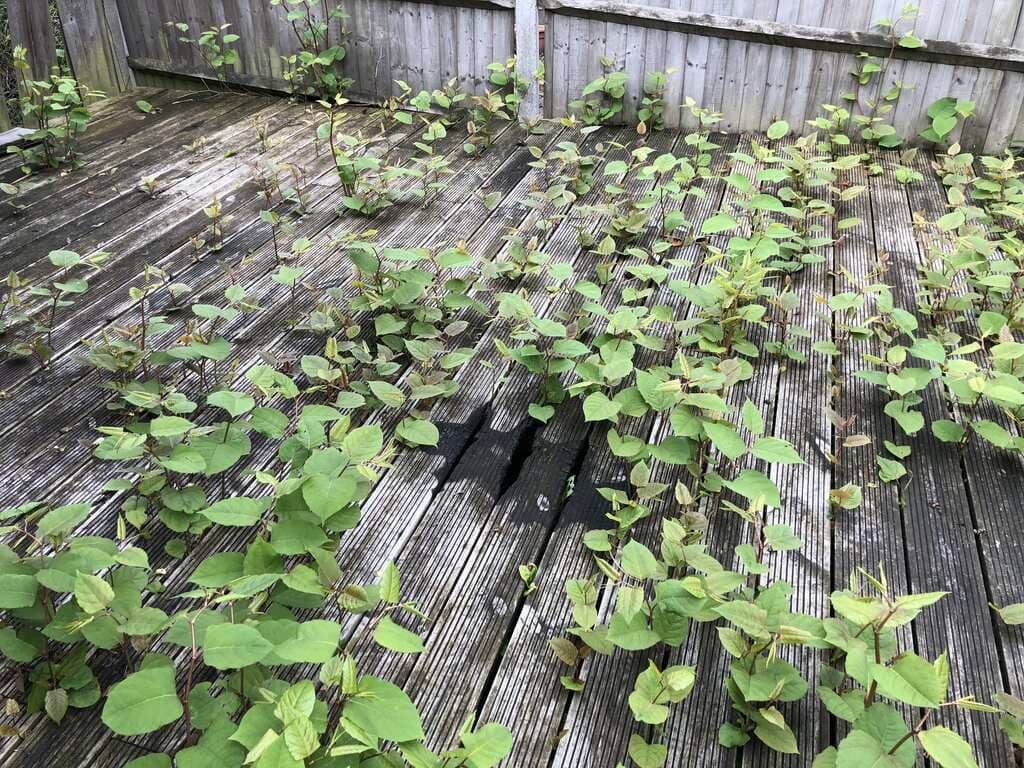
Yes. Once temperatures warm up, new red/purple shoots emerge from the ground, often stronger due to the energy stored over winter.
This is why many homeowners see sudden, aggressive growth between March and May, with canes commonly reaching 2–3 metres in a single season.
Is winter a good time to treat Japanese knotweed?
Winter can be a valuable treatment window, depending on the method used.
Chemical treatment considerations
Herbicide applications are most effective in late summer or early autumn, when the plant is actively drawing nutrients into its rhizomes. In winter, absorption rates are low, so herbicide alone is unlikely to provide effective control.
Winter excavation and removal
Winter often provides improved access for mechanical excavation because:
- Growth is reduced
- The site is clearer
- Ground conditions expose rhizome structures more easily
Professional excavation is highly effective year-round, but winter can offer logistical advantages.
Surveying and mapping
Winter surveys can help identify last year’s canes, growth boundaries and rhizome spread. Professionals can map and plan a treatment programme that starts early in the next growing season.
Can Japanese knotweed damage property during winter?
Even during winter, Japanese knotweed can continue to damage property. Although the plant appears dormant, its underground rhizome system remains active and capable of spreading. These rhizomes can extend further beneath the surface, exploit small cracks in paving and concrete, disrupt drainage systems, and place pressure on foundations, retaining walls and other structures. Because the plant never truly dies back, the structural risk does not pause over winter, making early management essential.
Does Japanese knotweed spread in winter?
While above-ground growth stops during winter and the visible spread slows down significantly, the plant does not become completely inactive. Underground, the rhizomes can continue to grow and extend their reach. These rhizomes are capable of spreading horizontally by up to 7 metres from the visible stand, regardless of the season. This means that even though the plant looks dead or dormant on the surface, it may still be expanding its underground network during winter, creating the potential for new shoots to emerge in spring.
Should you wait until spring to deal with Japanese knotweed?
No. The longer the plant is left, the further it spreads. Even if the above-ground canes look dead, the rhizomes are still active.
Winter is an ideal time to:
- Arrange a professional survey
- Plan a treatment or removal programme
- Start excavation
- Prevent the plant from gaining more ground next season
Professional advice: why Japanese knotweed never dies naturally in winter
Japanese knotweed is an engineered survivor, designed to withstand harsh UK winters and return stronger each spring. Its biological structure gives it year-round resilience, which is why cold weather alone is never enough to kill it.
Deep rhizomes protect against frost
The plant stores most of its energy in thick underground rhizomes buried well below the frost line. Even when surface temperatures drop below zero, these rhizomes remain insulated and fully alive.
Dormancy preserves energy reserves
During winter, knotweed enters a dormant state rather than dying. Growth pauses, leaves fall away and canes turn brown, but the plant is conserving energy ready for rapid regrowth when spring arrives.
Rapid spring regeneration outcompetes native plants
As soon as temperatures rise, knotweed uses its stored energy to produce fast, aggressive new shoots. This allows it to regain height quickly and dominate surrounding vegetation.
Regrowth from tiny fragments
Perhaps its most challenging trait is its ability to regenerate from rhizome fragments as small as a fingernail. Even disturbed or partially removed roots can create a new infestation.
Because of all this, winter die-back is only cosmetic. While the surface growth appears dead, the plant itself remains fully viable beneath the soil. Effective eradication requires targeted professional treatment, not reliance on seasonal die-back.
When to contact a specialist
If you suspect Japanese knotweed on your property at any time of year, especially when it looks dormant, early action is key. A qualified contractor can confirm identification, map the infestation, and recommend a treatment plan tailored to your site and future property plans.