How Do You Eradicate Japanese Knotweed?

By | CYB Japanese Knotweed Removal & Management Blog | No Comments

It is widely written and a common misconception that Japanese Knotweed can be eradicated from a site if placed under a herbicide treatment plan. Unfortunately, this is not the case! Although the Japanese Knotweed growth may seem to have stopped growing after herbicide treatment, it is in fact, in a state of forced dormancy. Movement of the soil could invigorate more growth meaning the herbicide programme would have to be re-started! Herbicide application is not regarded as an ‘eradication’ technique and we would suggest speaking to a specialist before any development is started, regardless of the number of years the Japanese Knotweed has been dormant or under treatment.

The Difficulties Of Removing Japanese Knotweed

Eradicating Japanese Knotweed is notoriously extremely difficult. The only way to totally eradicate the plant is to remove all infested soil from the area including the whole rhizome structure. You do not want to leave any behind! The process on site in principle is simple: follow and remove all underground rhizome growths until the root structure of the plant is no longer visible. Completing this task sounds easy but can be extremely difficult when you factor in the expansive coverage of ground that Japanese Knotweed can infest, along with the licencing which is required to legally dispose of the material.

The complete eradication and removal of Japanese Knotweed can be costly, but this is the only method to ensure no growth remains on site and building works or garden maintenance can be carried out without the major risks of future damage and spread. Without the removal of this problem species, homeowners are risking spreading the growth around their property, along with fines if disposed of illegally.

For any queries on the above or if you would like a free identification of a potential Japanese Knotweed plant, please contact us at info@cyb-environmental.com

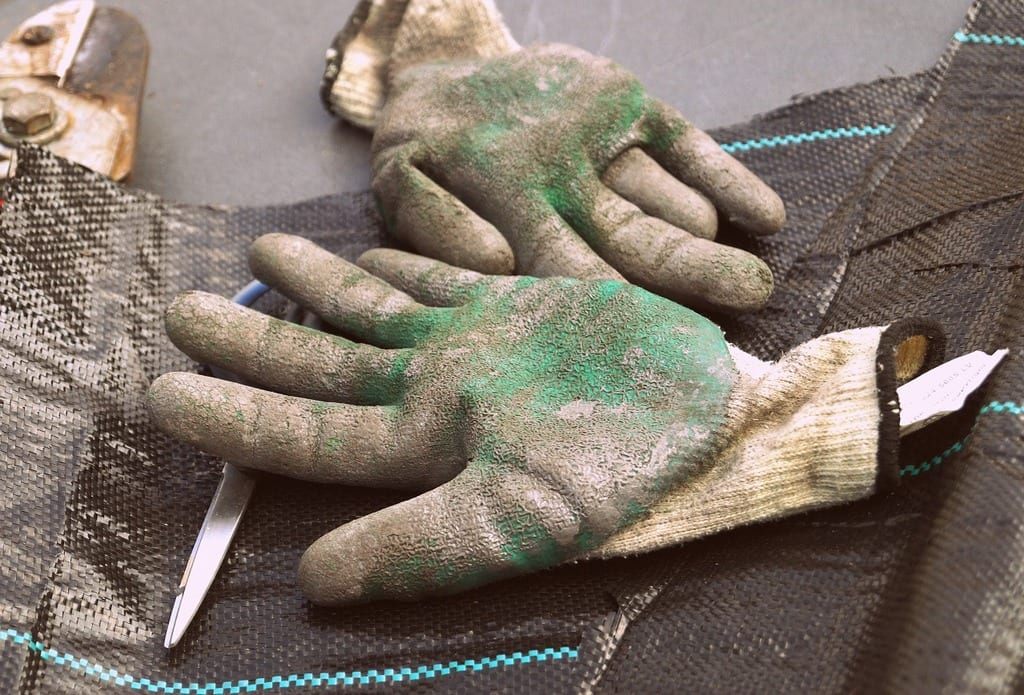
gardening gloves japanese knotweed removal uk - london cardiff bristol

How To Kill Japanese Knotweed

By | CYB Japanese Knotweed Removal & Management Blog | No Comments

Japanese Knotweed is a highly invasive, non-native plant and is considered one of the most problematic plant species in the UK and Ireland. Japanese knotweed is extremely hardy and can cope under stressful conditions, where other species would not. This being the case, Japanese Knotweed does not give up easily and killing it can be something that is best left to the professionals!

Methods Of Eradication

The only way to eradicate Japanese Knotweed is to completely remove the plant and its rhizomes from the ground and disposing of in a licenced landfill. Some believe that if they remove the above-ground growth, then the plant will die. This is not the case. The above-ground growth of Japanese Knotweed can be removed and incinerated at a licenced facility, however, this will not kill the plants underground growth and the plant will continue to grow. Japanese Knotweed has an extensive underground rhizome system that can spread up to 7 metres horizontally and 3 metres deep, this can make it extremely hard to kill on site.

After establishing that the only way to ‘kill’ Japanese Knotweed is to completely remove all of the infested soil and take it off-site to a licensed landfill, what else can be done to control Japanese Knotweed? The most popular and cost-effective method of dealing with Japanese Knotweed is to control its growth through persistent but monitored herbicide application. Herbicide application is a good way to control the plant and place it into a forced dormancy underground – stopping it from growing and spreading. Applying herbicide to the leaves of the plant at specific times of the year and by a trained professional, allows the herbicide to travel to the root of the plant via photosynthesis.

Japanese Knotweed certified surveyors will be able to determine the amount of chemical to use depending on the maturity and extent of the growth. This will ensure that the growth does not get ‘flooded’ with chemical and receives the correct amount to have the greatest long-term effect. If the chemical is over-applied to the leaves of the Japanese Knotweed plant, an adverse effect can happen which affects our ability to control the growth. If over application occurs, the plant will have an adverse reaction, but not one you want to see! You will see the plant begin to form smaller, triangular-shaped leaves and in much greater numbers than before. These new leaves have a much smaller percentage of coverage compared to healthy leaves, therefore, we can get far less herbicide onto the leaves and gaining control is very difficult, sometimes impossible. This type of growth is called ‘Bonsai growth’ and herbicide control is difficult, sometimes impossible and would require full removal.

We would suggest that Japanese Knotweed treatment is completed by a certified professional for best results and would never advise anyone to attempt themselves. It is important to instruct a PCA Accredited company such as CYB Environmental to put an herbicide treatment programme in place and ensure that the growth is treated properly, professionally and with the potential of providing an Insurance Backed Guarantee for lending purposes in the future.

For any queries on the above or if you would like a free identification of a potential Japanese Knotweed plant, please contact us at info@cyb-environmental.com

How To Correctly Identify Japanese Knotweed

By | CYB Japanese Knotweed Removal & Management Blog | No Comments

Japanese Knotweed is an invasive non-native plant pest and is considered one of the most problematic plant species in the UK and Ireland. This is mainly due to its highly invasive nature and its extremely rapid growth rate. The species was introduced to Britain in mid-19th century as an ornamental plant for large gardens, prized due to its imposing size and sprays of creamy white flowers.

Identifying Japanese Knotweed

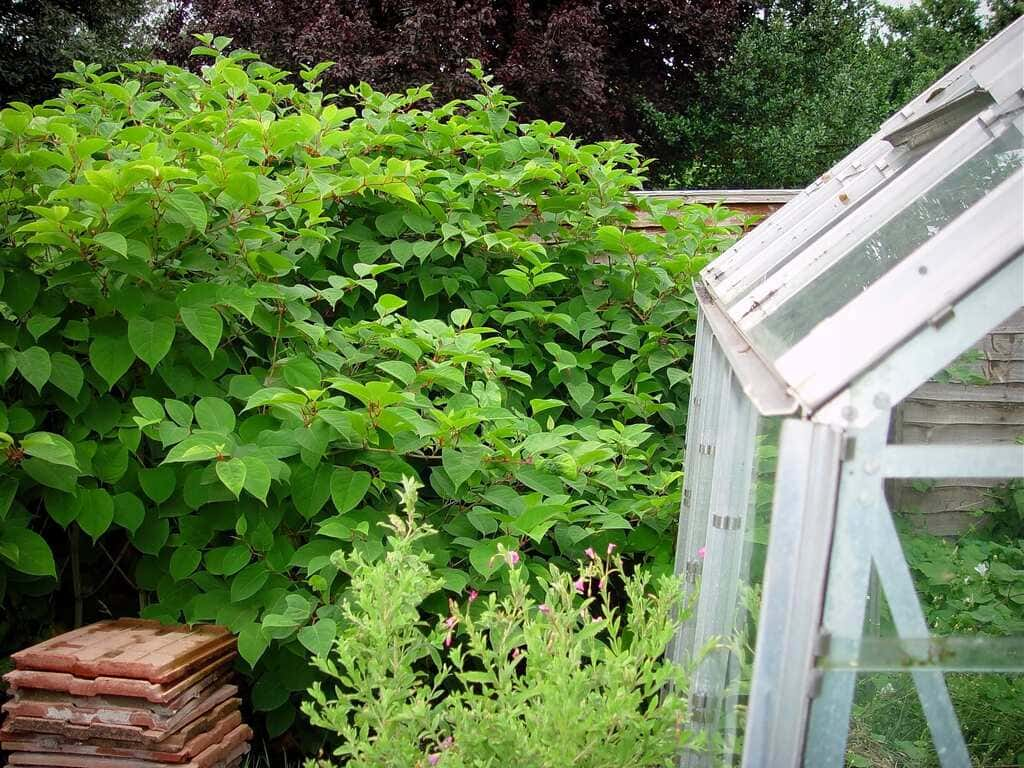
Japanese Knotweed plants have a Creamy white colour, 0.5cm wide. It forms clustered panicles that can grow to 10cm and bloom in the very late summer around August/September time. The stem of the plant grows in zig-zag pattern, with green, purple and red speckles visible on the cane itself. The cane is hollow and grows to 2-3 metres in height. Can Grow up to 2cm a day. Japanese Knotweed leaves are a light green with red or purple flecks. Heart or shovel-shaped with a pointed tip and shoots out from nodes in a zig-zag pattern. New leaves are rolled up with dark red veins, mature leaves can grow up to 20cm. Japanese Knotweed can grow up to 10cm per day during late spring / early summer, with the plant typically growing up to 2.1m (7ft) but can grow up to 3m (9.8ft).

Japanese Knotweed is a self-propagating plant, meaning that it spreads and grows from fragments of the plant itself. Japanese Knotweed has an extensive underground rhizome system and if you were to snap a piece of the rhizome you would see that inside of Japanese Knotweed rhizome is a bright orange colour and this is how we are able to determine whether plant is in fact Japanese Knotweed.

Dead canes of Japanese Knotweed can also be mistaken for doc plants and vice versa, with the dead cane looking woody. Mature canes of Japanese Knotweed are thick and strong like bamboo.

For any queries on the above or if you would like a free identification of a potential Japanese Knotweed plant, please contact us at info@cyb-environmental.com

how fast does japanese knotweed grow?

How Fast Does Japanese Knotweed Grow?

By | CYB Japanese Knotweed Removal & Management Blog | No Comments

Japanese Knotweed is an invasive non-native plant pest and is considered one of the most problematic plant species in the UK and Ireland. This is mainly due to its highly invasive nature and its extremely rapid growth rate. The species was introduced to Britain in mid-19th century as an ornamental plant for large gardens, prized due to its imposing size and sprays of creamy white flowers.

Japanese Knotweed’s Rapid Growth Patterns

During the spring and summer months, Japanese knotweed has been reported to grow as quickly as 10cm a day. However, there is no research to support how fast it spreads underneath the ground. Japanese Knotweed has an extensive underground rhizome system that can spread up to 7 metres horizontally and 3 metres deep. However, from experience, underground rhizome growths reach approximately 2m in depth and width. Japanese Knotweed can grow up to 0.3 – 0.4 metres per week, meaning that in just 10 weeks a cane of the plant can reach up to 3-4 metres.

The spread of Japanese knotweed can be increased by the breakage or disturbance of the ground. This is why it is important to underline the future plans of a site and to establish what method of treatment should be put in place prior to works. Laws are in place to prevent the spread of the highly invasive plant: Wildlife and Countryside Act 1981 – “You must not facilitate the spread of Japanese Knotweed in the wild.” Failure to comply with the act could result in large fines.

Why Japanese Knotweed Is Hard To Eradicate

Japanese Knotweed is a self-propagating plant, meaning that it spreads and grows from fragments of the plant itself. A common mistake is to trim the plant once it is overgrown and put the fragments in common waste. Japanese Knotweed plants must be taken to a licensed landfill or licensed incineration centre, once removed from a site.

Please see the relevant law put in place to ensure the appropriate care is taken when disposing of the plant: Environmental Protection Act 1990 – “Waste containing Japanese Knotweed is classified as ‘controlled waste’. As such, you must observe the appropriate duty of care for its proper handling and disposal“.

It is important to note that when applying herbicide to the plant, it is the leaves that will hold the herbicide prior to photosynthesis that allows the herbicide to travel to the root structure of the plant and cause it to lie dormant underground. If disturbed, we may see new growths and the treatment programme will have to re-start.

If undisturbed and untreated Japanese Knotweed plants will continue to grow rapidly and thrive in damp and non-resistant areas. Causing external and internal damage to boundary walls of properties, gardens and outer buildings.

For any queries on the above or if you would like a free identification of a potential Japanese Knotweed plant, please contact us at info@cyb-environmental.com

Japenese Knotweed plant

Can You Eat Japanese Knotweed?

By | CYB Japanese Knotweed Removal & Management Blog | No Comments

Japanese knotweed has a reputation as an aggressive, noxious weed, and it’s well-deserved deserved reputation comes from its growth patterns, extending up to 3 feet (1 m.) every month, sending roots up to 10 feet into the earth. However, this plant isn’t all bad because certain parts of it are edible.

Disclaimer

This article by CYB Environmental seeks to provide insight in the prospects of potentially eating Japanese Knotweed, as research, as well as trial and error, shows that parts of the plant are edible. However, this article is solely for theory and should be taken with an imaginary context. Before consuming Japanese Knotweed, be sure to contact your doctor or do your own research.

About Eating Japanese Knotweed

If you’ve ever wondered, “is Japanese knotweed edible,” then you’re not alone. There are actually a number of “weeds” that can be useful in this way. The stems of Japanese knotweed have a tart, citrusy flavor, much akin to rhubarb. Better yet, it is a rich source of minerals, including potassium, phosphorus, zinc, and manganese, as well as vitamins A and C.

Before you gather an armload of Japanese knotweed, however, it’s important to know that only certain parts are safe to eat, and only during certain parts of the year. It’s best to gather shoots when they’re tender in early spring, generally under about 10 inches (25 cm.) or less. If you wait too long, the stems will be hard and woody.

Methods Of Preparing Japanese Knotweed

So how can you eat Japanese knotweed? Basically, you can use Japanese knotweed any way you would use rhubarb and the shoots are interchangeable in recipes for rhubarb. If you have a favored recipe for rhubarb pie or sauce, try substituting Japanese knotweed.

You can also incorporate Japanese knotweed into jams, purees, wines, soups, and ice cream, to name just a few. You can also combine Japanese knotweed with other fruit such as apples or strawberries, which complements the tart flavor.

Further Disclaimer About Japanese Knotweed

The contents of this article are for educational and gardening purposes only. Before using or ingesting ANY herb or plant for medicinal purposes or otherwise, please consult a physician, medical herbalist, or other suitable professional for advice.

For further information on Japanese Knotweed and the possibilities of removing it from your garden completely, be sure to contact our experts at CYB.

What to do if neighbour has Japanese knotweed

What to do if your neighbour has Japanese Knotweed

By | CYB Japanese Knotweed Removal & Management Blog | No Comments

If your neighbour fails to treat a Japanese knotweed infestation in their garden and the Japanese knotweed starts growing in your garden, you may have a claim against your neighbour for any damage to your property caused.


Firstly, what is Japanese Knotweed?

Japanese knotweed (Fallopia japonica) and its hybrids are a non-native, invasive species of plant. They invade natural habitats and out-compete the native plants and animals that normally live there. It spreads very easily and is an extremely strong plant that can cause structural damage to buildings, As well as rendering properties as ‘unmortgagable’ by the majority of the UK major lenders.


How do I treat Japanese knotweed growing in my garden?

Japanese knotweed cannot simply be dug up and thrown away. The spread of Japanese knotweed is a serious threat to our countryside, and the native plants and animals that rely upon it. Tackling the plant should be taken very seriously with thorough planning and execution if we are to combat this invasive weed.

Chemical control is the application of specialised herbicides to Japanese Knotweed plants over a period of several growing seasons. This is often the most economical treatment option and will cause the least amount of disruption.

Japanese Knotweed can be cut, and the infested soils can be excavated and removed to an off-site, appropriately licensed, waste-management facility. The volume of excavated soil can vary from site to site and is an expensive and time-consuming type of removal.

Japanese Knotweed can be excavated and then buried on-site, but it must be covered with a specialist root barrier membrane to prevent any re-growth. A root barrier membrane can also be used to encapsulate Japanese Knotweed where space does not allow burial.


What should I do if my neighbour has Japanese Knotweed?

If you notice your neighbour may have a Japanese knotweed issue, the first step to take would be to make sure they know and understand the implications of this invasive plant. It could be that they haven’t identified the Japanese Knotweed and therefore were unaware of the trouble it could cause.


What are the legal implications of your neighbour having Japanese Knotweed?

It’s worth noting that an owner or occupier of land is not obliged to control, remove or treat Japanese knotweed on their land. They can be liable, however, should they allow the knotweed to spread onto neighbouring land. There is also a significant risk that even if the knotweed does not spread onto the neighbour’s land, the owner may still be liable to the diminution in value of the neighbour’s land for the knotweed simply being in the vicinity.

If you think you may have a Japanese Knotweed problem, then be sure to get in contact with one of our team now to get it sorted as quickly as possible! Summer is one of the worst times for Japanese Knotweed to take hold on your property, so the sooner you get it sorted, the better. Call us now on 020 3005 8755.

What To Do If You Find Japanese Knotweed

What To Do If You Find Japanese Knotweed

By | CYB Japanese Knotweed Removal & Management Blog | No Comments

For the vast majority of people in the UK, their property is their largest asset. But, unfortunately, Japanese knotweed can have a serious impact on a property’s value and can deter potential buyers from purchasing a home. This is still the case even if the knotweed has been successfully treated, making homes particularly difficult to sell. But how can you identify Japanese knotweed – and get rid of it?

Removing Japanese Knotweed is a trickier job than simply digging up the plant. Any rhizomes, tiny fragments of stem or root can cause the plant to begin growing all over again. For the complete removal of Japanese Knotweed, contact our specialists at CYB Environmental.

What Is Japanese Knotweed?

Japanese knotweed, also known as ‘Fallopia Japonica‘, is the most common form of knotweed found in the UK. It is highly invasive and grows vigorously from year-to-year, producing stems up to 3m tall (10ft) during summer months.

But it is the roots that cause the biggest problem, as the plant develops an extensive network of underground stems known as ‘rhizomes’, which can grow through hard surfaces such as concrete and tarmac. Worryingly, knotweed trials have shown that rhizomes as little as 0.7g (around 10mm or the length of your fingernail) can produce a whole new plant within 10 days. This can cause serious damage to the foundations – making selling highly challenging.

What To Do Now That You’ve Identified Japanese Knotweed

As a quick fix, you may be looking at how to get rid of Japanese knotweed yourself, without the use of specialists. We would not recommend this as the removal of Japanese Knotweed is rarely successful for beginners. The plant can grow back, with even the slightest bit of stem left behind. A specialist, like CYB Environmental, will use optimised chemicals and techniques, backed by years of experience in the removal of Japanese Knotweed.

Am I Liable If My Neighbour Has Japanese Knotweed?

The short answer is no. According to a recent Court of Appeal ruling, landowners are now able to claim damages if the identified Japanese knotweed plant has invaded their property from elsewhere, which won’t leave you out of pocket. In short, if it can be proved that the knotweed growing stemmed from an adjoining property, that homeowner could be held liable for the cost of its removal and any loss of value.

How Was Japanese Knotweed Introduced to the UK?

Why Was Japanese Knotweed Introduced to the UK?

By | CYB Japanese Knotweed Removal & Management Blog | No Comments

An Introduction To Japanese Knotweed

The scientific name for Japanese Knotweed is Fallopia Japonica, with other family derivatives by the names of Giant Knotweed and Himalayan Knotweed. Being a native plant from Japan, China and Taiwan, Japanese Knotweed was introduced to Britain by the Victorians in the 1800s as an ornamental garden plant. Known for its rigorous growth and rapid spreading, Japanese Knotweed can grow up to 2 metres in length, within a single season, with underground roots stretching for up to 7 metres. Japanese Knotweed is illegal to plant in the United Kingdom, but completely legal to have it growing within your own garden, or land. However, if the plant spreads to neighbouring houses or gardens, you may be liable for legal action being taken against you. Japanese Knotweed is treated as controlled waste and cannot be dumped in domestic green recycling bins, with only licensed landfill sites being able to take it.


Popularity In The Past

A German-born botanist by the name of Philipp von Siebold found Japanese Knotweed growing up the side of a volcano and decided to begin using it as an ornamental plant for residential gardens. The plant was celebrated for its beauty and potential use for feeding animals. In 1845, Japanese Knotweed began to be sold commercially by nurseries and studies showing how it was used during coal mining to stabilise loose soil.


Issues That Japanese Knotweed May Cause

With Japanese Knotweed being discovered growing up the sides of volcanoes, the destructive capabilities of the plant were completely unknown. With the erratic climate and constant deposits of ash covering the plant, it would be naturally kept in check, being able to solely survive due to its deep rooting capabilities. Here in the United Kingdom, we tend to not have volcanoes in our back gardens and with nothing to fight against, Japanese Knotweed can grow at an unchallenged rate and may have devastating consequences. It is possible for Japanese Knotweed to grow at up to 20cm per day and has the ability to break through a number of surfaces. These surfaces are some of the sturdiest and most common throughout society, such as concrete, tarmac and brick. It can overpower practically any other plants, swarming them and preventing access to light.


The Removal Of Japanese Knotweed

Removing Japanese Knotweed is a trickier job than simply digging up the plant. Any rhizomes, tiny fragments of stem or root can cause the plant to begin growing all over again. For the complete removal of Japanese Knotweed, contact our specialists at CYB Environmental on info@cyb-environmental.com

what-does-a-japanese-knotweed-winter-look-like

How to spot Japanese Knotweed in Each Season

By | CYB Japanese Knotweed Removal & Management Blog | No Comments

Japanese Knotweed is one of the most aggressive invasive plants in the UK, capable of spreading quickly and causing serious problems for property owners. If left untreated, the plant can damage paving, walls, and drainage systems while also creating difficulties when selling or refinancing property.

Recognising the plant early is the first step toward effective Japanese Knotweed removal. Because the appearance of Japanese Knotweed changes throughout the year, it is important to understand how it looks in each season.

At CYB Environmental, specialists in Japanese Knotweed removal, we regularly help homeowners, landlords, and property developers identify and manage infestations before they become extensive. In this guide, we explain how to spot Japanese Knotweed in spring, summer, autumn, and winter so you can take action quickly.

If you suspect Japanese Knotweed on your property, it is always recommended to seek professional advice rather than attempting removal yourself. Professional treatment plans can prevent the plant from spreading further and help avoid mortgage or legal complications.

For expert help, visit our Japanese Knotweed Removal page on CYB Environmental to arrange a professional survey.

How to Identify Japanese Knotweed in Every Season

Identifying Japanese Knotweed in Spring

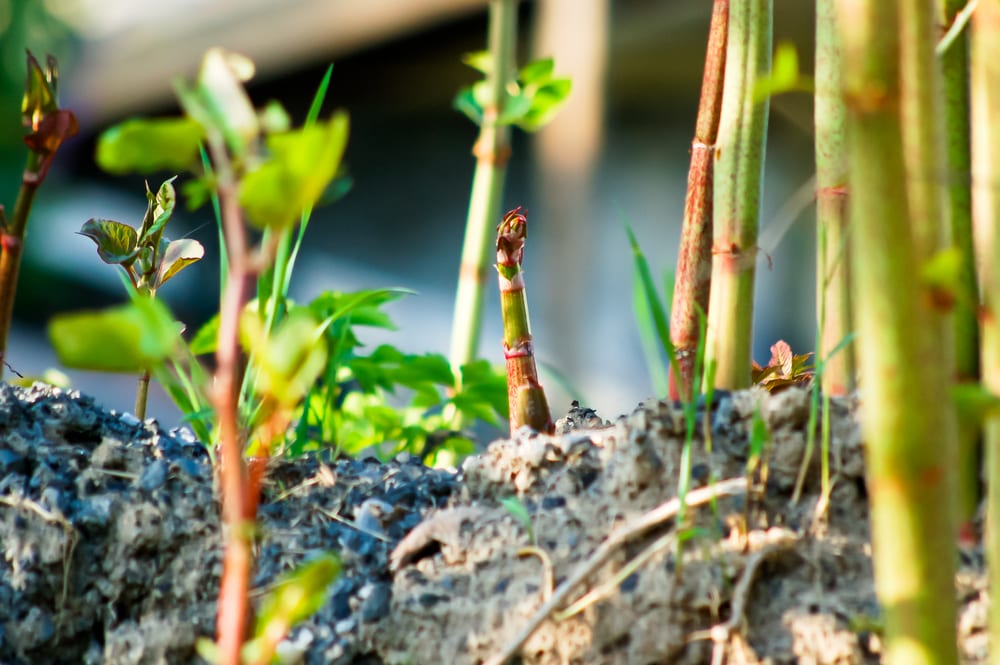
Spring is when Japanese Knotweed begins its rapid growth cycle. The first shoots emerge from the ground, often growing extremely quickly compared to other garden plants.

These early shoots typically have a distinct red or purple tint and resemble thick asparagus-like stems. As temperatures increase, the shoots grow rapidly and may reach up to three metres tall by late spring.

During the early stages, the leaves appear tightly curled and may also display reddish colouring. As spring progresses toward summer, the leaves gradually open up and become a lighter green colour.

Spring is often the best time to identify Japanese Knotweed early, allowing property owners to begin treatment before the plant fully matures.

Spring identification checklist

  • Shoots with a red or purple tinge
  • Fast-growing stems emerging from the ground
  • Leaves that are tightly curled in early growth
  • Rapid height increase in a short period of time

If you notice these signs, it is advisable to book a professional site survey to confirm whether the plant is Japanese Knotweed.

Identifying Japanese Knotweed in Summer 

By summer, Japanese Knotweed has typically reached its full growth stage. The stems become taller and hollow, resembling bamboo-like canes rather than the asparagus-like shoots seen in spring.

The leaves become large, flat, and heart-shaped with a pointed tip. They grow in a distinctive zig-zag pattern along the stems, which is one of the easiest ways to identify the plant.

During mid-to-late summer, clusters of small creamy-white flowers often appear. These flowers hang from the plant in delicate sprays and are a clear indicator that the plant has reached maturity.

Because the plant is highly visible in summer, this season often reveals infestations that may have gone unnoticed earlier in the year.

Summer identification checklist

  • Hollow stems resembling bamboo canes
  • Large green heart-shaped leaves
  • Zig-zag leaf pattern along the stem
  • Clusters of creamy-white flowers

At this stage, professional Japanese Knotweed removal services are essential to control the infestation and prevent further spread.

Identifying Japanese Knotweed in Autumn 
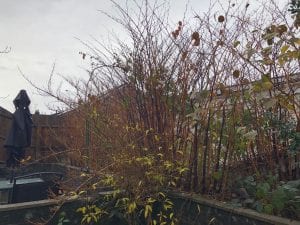
japanese knotweed in autumn, in london

At the start of autumn, Japanese Knotweed still closely resembles its summer appearance. The plant typically remains between two and three metres tall, with green leaves and clusters of white flowers still visible.

However, as temperatures begin to drop, the plant starts to enter dormancy. The leaves gradually change colour, turning yellow before eventually becoming brown.

The bamboo-like stems also begin to darken, turning a deep brown shade as the season progresses.

Although the plant appears to be dying back, the underground rhizome network remains active beneath the soil. This is why treatment can still be effective during autumn.

Autumn identification checklist

  • Yellowing heart-shaped leaves
  • Darkening bamboo-like canes
  • Plants roughly two to three metres tall
  • Leaves beginning to wilt

Even when the plant appears weaker above ground, its underground rhizomes may still be spreading, which can worsen infestations if not professionally treated.

Identifying Japanese Knotweed in Winter 
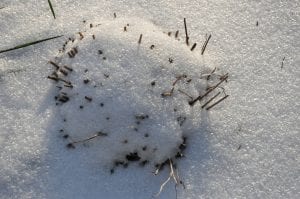
japanese knotweed under snow in winter

Winter is the most difficult season to identify Japanese Knotweed, as the plant becomes dormant. However, there are still several signs that can indicate its presence.

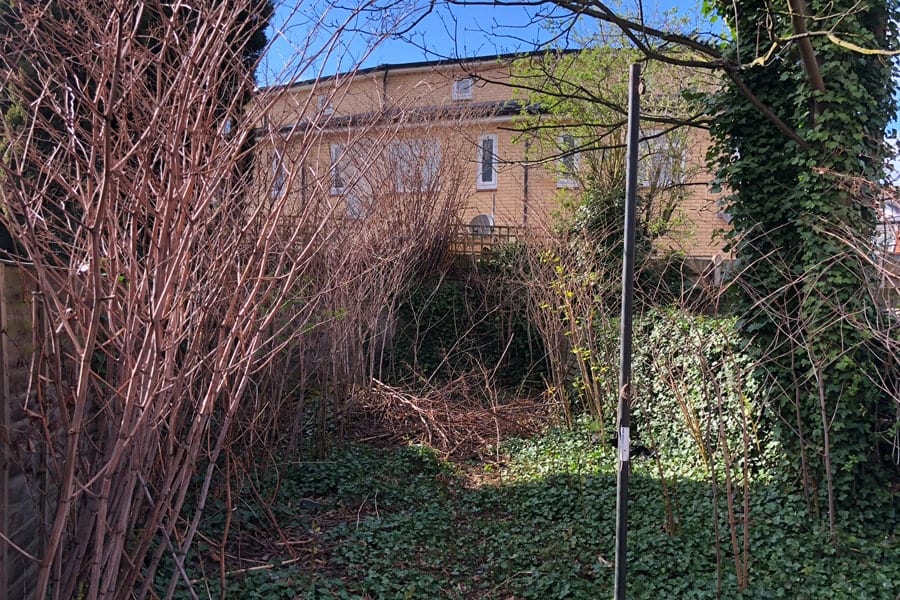
After the first frost, the leaves usually turn brown and fall away completely. The hollow canes left behind become dry, brittle, and fragile, often snapping or collapsing onto each other.

These dead canes may remain standing or scattered on the ground for years because they decompose very slowly.

Although the plant appears inactive above ground, the rhizomes beneath the soil remain alive and ready to produce new shoots once spring arrives.

Winter identification checklist

  • Brown or fallen leaves
  • Brittle, hollow stems
  • Collapsed canes lying on the ground
  • Old stems that take years to decompose

Because Japanese Knotweed re-grows quickly in spring, winter can be a good time to schedule a professional survey and management plan before the next growth cycle begins.

Why Professional Japanese Knotweed Removal Is Important

Attempting to remove Japanese Knotweed without professional guidance can often make the problem worse. Even tiny fragments of the plant’s underground rhizome system can regenerate into new plants.

Improper handling can also spread contaminated soil, causing infestations to appear in new areas.

Professional Japanese Knotweed removal specialists provide:

  • Accurate plant identification
  • Site surveys and risk assessments
  • Long-term treatment plans
  • Environmentally responsible disposal
  • Documentation for property sales and mortgages

CYB Environmental offers expert support for homeowners and developers dealing with invasive plant issues.

Wrapping Up

Japanese Knotweed can look very different depending on the season, which makes early identification challenging for many property owners. From red shoots in spring to bamboo-like canes in summer and brittle stems in winter, recognising the warning signs is essential.

If you believe Japanese Knotweed may be growing on your property, it is important not to attempt removal yourself. Professional Japanese Knotweed removal services ensure the infestation is properly controlled and treated before it causes further damage or property complications.

Contact CYB Environmental today to arrange a survey and learn more about our expert Japanese Knotweed removal solutions.

Frequently Asked Questions

1. How can I identify Japanese Knotweed in my garden?

Japanese Knotweed can be identified by its red spring shoots, hollow bamboo-like stems, and large heart-shaped leaves arranged in a zig-zag pattern. In late summer, clusters of small white flowers appear. If you notice these signs, it is best to contact professionals for confirmation and advice.

2. What does Japanese Knotweed look like in winter?

During winter, Japanese Knotweed becomes dormant and loses its leaves. The remaining stems become brown, dry, and brittle. These hollow canes often collapse and remain on the ground for long periods because they decompose very slowly, making winter identification more difficult.

3. Why is Japanese Knotweed dangerous for properties?

Japanese Knotweed spreads rapidly through underground rhizomes that can extend several metres. These rhizomes can damage paving, walls, and drainage systems. The presence of Japanese Knotweed can also affect property values and cause mortgage lenders to require treatment plans before approving loans.

4. Can I remove Japanese Knotweed myself?

Removing Japanese Knotweed yourself is not recommended because small fragments of the plant can regrow and spread. Incorrect disposal may also breach environmental regulations. Professional removal specialists provide approved treatment plans that ensure the plant is managed safely and effectively.

5. When is the best time to treat Japanese Knotweed?

Japanese Knotweed can be treated throughout the year, but late summer and autumn are often the most effective periods. During this time, the plant transfers nutrients to its rhizomes, allowing treatment products to reach the underground root system and deliver stronger long-term control.

6. How quickly does Japanese Knotweed grow?

Japanese Knotweed grows extremely quickly, particularly during spring and summer. Under ideal conditions, the plant can grow up to 20cm per day. Its underground rhizomes can spread several metres, allowing infestations to expand rapidly if not managed professionally.

7. Will Japanese Knotweed return after treatment?

Without proper management, Japanese Knotweed can return because of its extensive underground rhizome system. Professional treatment plans usually include multiple applications and monitoring. Many specialist companies also provide long-term guarantees to ensure the infestation is fully controlled and does not return.


Japanese Knotweed in winter

Does Japanese Knotweed Die in Winter?

By | CYB Japanese Knotweed Removal & Management Blog | No Comments

Japanese knotweed can play havoc in your garden during the summer months; it has similar traits to bamboo and can grow over seven feet tall. But when it comes to winter, the Fallopia Japonica, or Japanese knotweed, seems to die off. The canes lose their leaves and turn brown. Over the winter the canes will slowly decompose and the remains of the plant will litter the ground. The decomposing remains of Japanese knotweed on the ground will stop other plants from growing on that patch of soil. This plant is truly nasty, but don’t be fooled by its decomposing state. This is the perfect time to go about removing this weed, as the plant is in fact not dead but in a dormant state. It will be back bigger and better with new shoots starting again in spring.    Read More